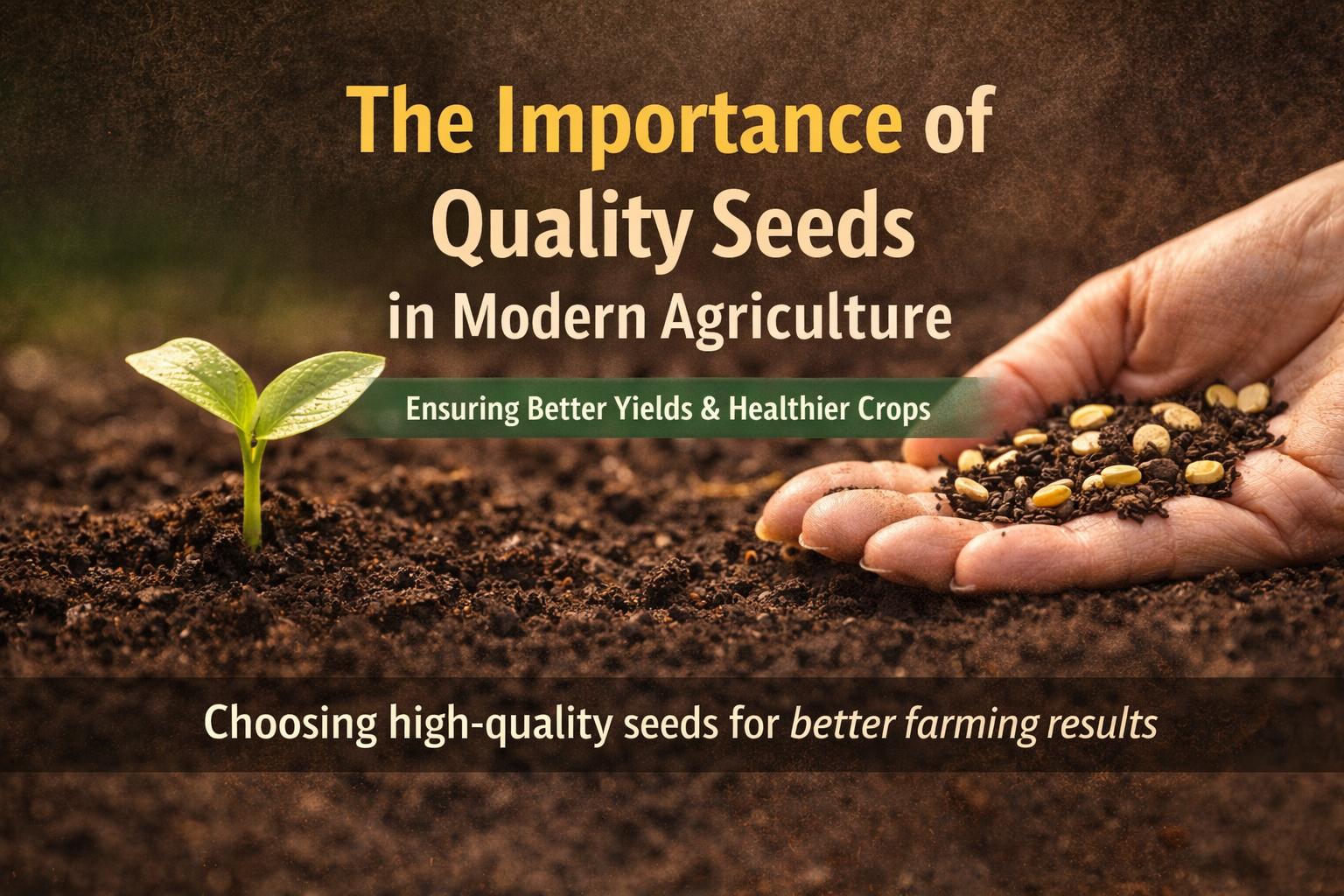
Seeds are the foundation of agriculture. Every successful crop begins with a healthy, high-quality seed. Whether you are a small-scale farmer, a commercial grower, or a home gardener, choosing the right seeds is crucial to yield, crop quality, and overall profitability.
In this blog, we’ll explore why quality seeds matter, different types of seeds available, and how to select the best seeds for your needs.
Why Quality Seeds Matter
High-quality seeds offer several advantages:
- Higher Germination Rate – More seeds sprout successfully, reducing wastage.
- Better Crop Uniformity – Plants grow evenly, making management easier.
- Stronger Disease Resistance – Quality seeds are often treated or bred to resist common pests and diseases.
- Higher Yield Potential – Improved genetics result in better productivity.
- Consistent Performance – Reliable results season after season.
Investing in quality seeds is one of the most cost-effective ways to increase farm output.
Types of Seeds Commonly Used
1. Hybrid Seeds
Hybrid seeds are produced by cross-pollinating two different parent plants. They are known for:
- High yield
- Uniform growth
- Strong resistance to diseases
However, seeds collected from hybrid crops usually do not produce the same quality in the next generation.
2. Open-Pollinated Seeds
These seeds are naturally pollinated and can be saved for future planting.
- Stable characteristics
- Cost-effective in the long run
- Suitable for traditional and organic farming
3. Genetically Modified (GM) Seeds
GM seeds are engineered for specific traits such as pest resistance or drought tolerance.
- Reduced need for pesticides
- Higher productivity in challenging conditions
Usage depends on local regulations and farming preferences.
4. Organic Seeds
Produced without synthetic chemicals or genetically modified organisms.
- Ideal for organic farming
- Environment-friendly
- Growing demand in health-conscious markets
How to Choose the Right Seeds
When selecting seeds, consider the following factors:
- Climate & Soil Type – Choose varieties suited to your local conditions.
- Crop Purpose – Fresh market, processing, or export.
- Disease Resistance – Look for resistant or tolerant varieties.
- Maturity Period – Early, medium, or late maturing crops.
- Certified Source – Always buy from trusted suppliers.
Proper Seed Storage Tips
Good storage maintains seed viability:
- Keep seeds in a cool, dry place
- Use airtight containers
- Avoid exposure to sunlight
- Label seeds with variety and date
The Future of Seed Technology
Modern seed technology focuses on:
- Climate-resilient crops
- Higher nutritional value
- Improved resistance to pests and diseases
- Sustainable farming practices
These innovations help farmers meet the growing global food demand while protecting the environment.